
Researching Your Revolutionary War Ancestors
Unraveling the lineage of those who fought for American independence can be a rewarding yet challenging endeavor. Whether you are a seasoned genealogist or a beginner, researching Revolutionary War ancestors requires a blend of traditional family history and specialized military searches. This article serves as a comprehensive guide, offering insights into databases, location-specific resources, and military record collections available online. By utilizing these tools, you can move beyond simple names and dates to discover the vital contributions and personal stories of your forebears during this pivotal period in history.
To determine if a potential ancestor served in the Revolutionary War, begin by noting their birthdate. Individuals born between 1735 and 1760, residing in the colonies during the war years, were likely of military age (typically 18 to 35, though exceptions existed).
Geographical context is also crucial. Identify the colony where your ancestor lived and, if they survived the war, their subsequent state of residence.
With diligent research and careful consideration of birth dates and locations, individuals can uncover the stories of their ancestors who played a role in the American Revolution. The resources listed below offer valuable tools for this undertaking.
Top Databases for Researching Revolutionary War Ancestors
Genealogical Research System (GRS)
The Daughters of the American Revolution (DAR) provides a free online gateway known as the Genealogical Research System (GRS), a digital archive that connects researchers to a wealth of ancestral data:
- Ancestor Database: Where users can uncover the vital statistics (births, deaths, and locations) of those who served in the Revolution.
- Descendants Database: Tracks the lineages of DAR members.
- GRC Index offers decades of Genealogical Records Committee Reports and historical transcriptions.
- Bible Records and Transcriptions Index: Catalogs family records often lost to time.
- Revolutionary War Digital Library: Provides a curated collection of primary sources and research guides.
The DAR website provides guides on how to use the GRS. You can find these guides in the “Using the Genealogical Research System (GRS)” section of their genealogy page. The guides cover topics such as:
- How to search the various databases
- Understanding the information provided in the records
- Tips for effective research
Patriot Research System (PRS)
The Sons of the American Revolution (SAR) maintains this system, which contains information on:
- Patriots: Individuals who have been approved by the SAR as having served in the Revolutionary War.
- Descendants: The descendants of these patriots.
- Graves: The known locations of patriots’ graves.
The system allows users to search for information based on various criteria, such as name, date of birth, and location. It also provides access to biographical sketches of many patriots, which can offer valuable insights into their lives and service.
Important Note about GRS & PRS
It is essential to understand that neither of these database systems are a complete source of all Revolutionary War patriots. There are likely many individuals who served in the war but whose records have not yet been discovered or documented.
Location-Specific Resources
Researching an ancestor’s local history provides vital context that makes searching Revolutionary War military records more effective. You might be surprised by the amount of information you can find in these sources. Using regional records is often the secret weapon when researching Revolutionary War ancestors who don’t appear in national indexes.
State Rosters
Published state rosters, containing lists of soldiers, have been digitally reproduced. The FamilySearch website has digitized copies of state rosters which are available under the collection title “United States Rosters of Revolutionary War Soldiers and Sailors, 1775–1783″.
Local Histories
Published during the 19th century, local histories provide a unique window into a community’s specific involvement in the conflict. These volumes are invaluable for researching Revolutionary War ancestors because they offer granular details, such as town-level activities and personal anecdotes, that are often missing from broader national records.
- Community Context: They detail how a specific town responded to calls for militia, where local companies were stationed, and even which homes were used as hospitals or headquarters.
- Biographical Sketches: Many authors interviewed the grandsons and granddaughters of patriots, preserving oral traditions and family lineages that might not exist in official government pension files.
- Identifying “The Neighbors”: Revolutionary War soldiers often served alongside brothers, cousins, and neighbors. Local histories help you identify these “FAN clubs” (Friends, Associates, and Neighbors), which can lead you to the records of a commanding officer that mention your ancestor.
- Property and Landmarks: These books often describe the exact location of old homesteads, mills, or private family cemeteries that have since been lost to development.
Most 19th-century local histories are now in the public domain. You can access them for free through these digital libraries:
- Internet Archive: This is perhaps the most robust resource for local histories. You can search by county and state (e.g., “History of Orange County, New York”) and often find multiple editions.
- Google Books: Google has scanned millions of volumes from university libraries. It is particularly useful because of its internal search feature, allowing you to search for a specific ancestor’s surname across the entire text of a 600-page book in seconds.
- FamilySearch Digital Library: FamilySearch has partnered with specialized genealogical libraries to digitize over 500,000 books. This collection is highly curated for researchers and includes many rare, self-published town histories that aren’t available elsewhere.
- HathiTrust Digital Library: A collaborative effort from academic and research institutions. HathiTrust is excellent for finding scholarly town histories and published colonial records that may contain rosters of local Revolutionary War militias.
- Chronicling America (Library of Congress): While primarily for newspapers, many local histories were actually serialized in newspapers before being published as books. Searching for “Revolutionary Reminiscences” in the local paper for your ancestor’s county can yield incredible results.
Tax Records
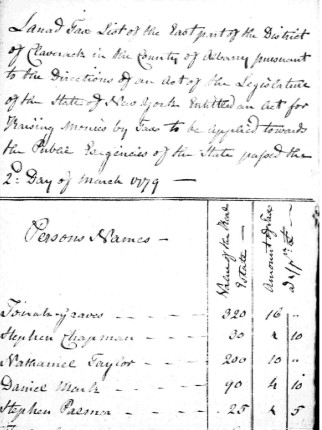
If your ancestor’s property was situated in a region impacted by the Revolutionary War, it implies they might have been indirectly affected. Taxes imposed during the war can offer clues about potential involvement. Nevertheless, it is crucial to corroborate tax records with additional sources, like military records, for a more complete picture.
Tracking Ancestors Through Tax Payment
Tax lists serve as a substitute for the missing census records of the 1770s and 1780s. They do more than just show wealth. They place your ancestor in a specific place at a specific moment in time. During the war, many states enacted special “Supply Taxes” to fund the Continental Army. If your ancestor appears on a 1779 or 1780 tax list, it proves they were present and contributing to the war effort financially, which is often enough to qualify them as a “Patriot” for organizations like the DAR (Daughters of the American Revolution).
Where to Find Digital Tax Records
Tax records are usually held at the county level, but many have been centralized and digitized.
- FamilySearch Catalog (Search by Locality): Tax records are rarely indexed by name on the main search page. Instead, go to the FamilySearch Catalog, search for the County and State, and look for the category “Taxation.” Many of these are digitized microfilm rolls that you can browse page-by-page.
- Ancestry.com (U.S. Census Reconstructed Records): Ancestry has a specific collection titled “U.S. Census Reconstructed Records, 1660-1820.” This database uses tax lists to fill the gaps left by the destroyed 1790 and 1800 records for many states, making it a quick way to find a name and a year.
Military Records
Types of Records
The specific military records you examine will determine the depth of information you can uncover. When researching Revolutionary War ancestors, bounty land files and pension files often provide the most human details. For instance, bounty land files and pension files often provide more detailed information beyond just a soldier’s name and rank. These files may include sworn statements from the soldier, as well as family members and acquaintances, making them invaluable resources for genealogical research.
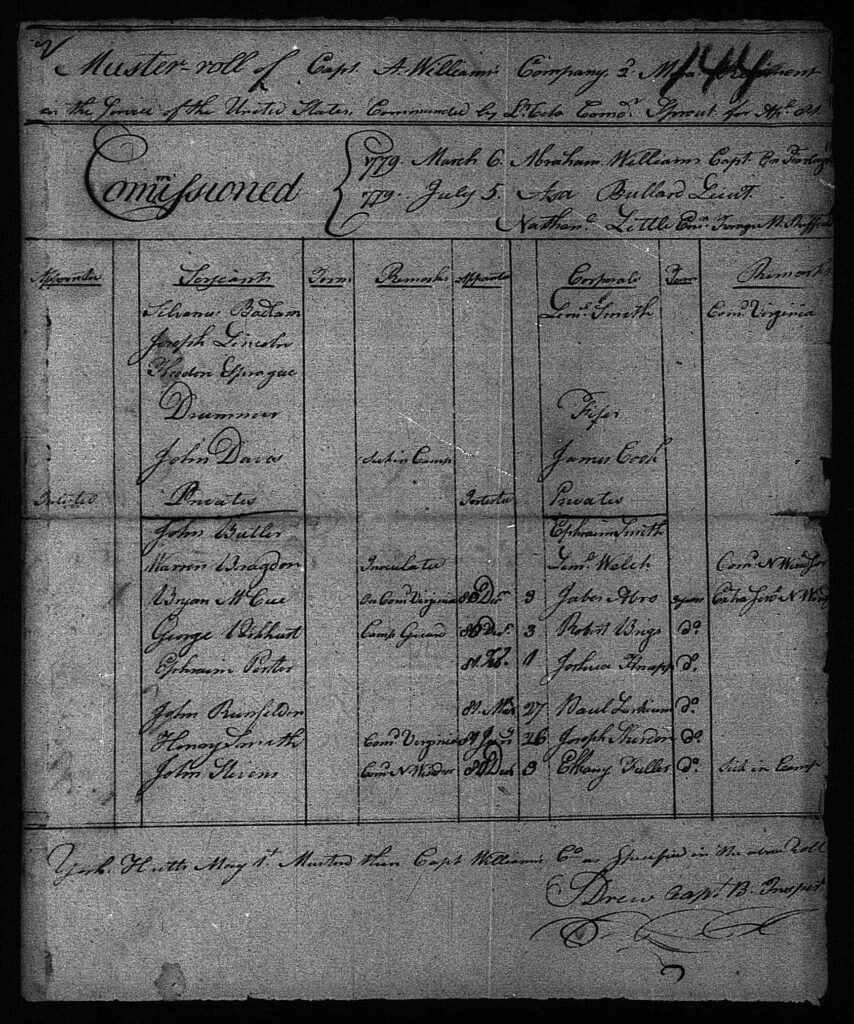
The following types of records are all valuable tools for documenting Revolutionary War soldiers:
Muster rolls are military rosters or lists providing detailed information about soldiers serving in a particular unit. These records were kept to track the presence and status of soldiers, including their names, ranks, enlistments, and sometimes physical descriptions.
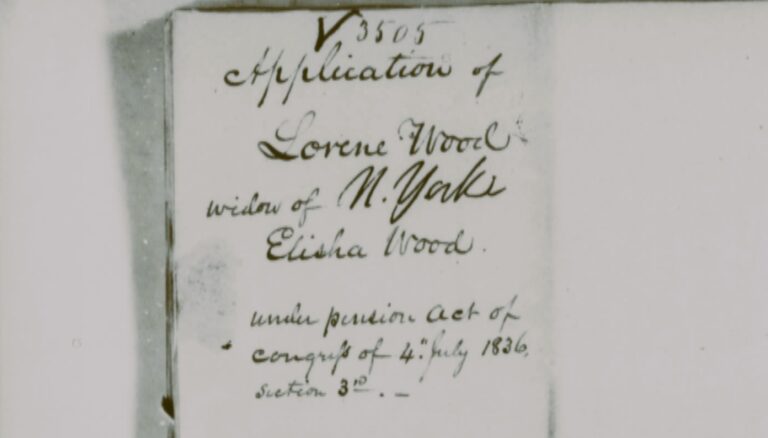
Pension records are documents that provide details about the pensions granted to Revolutionary War soldiers and their widows. Pensions were established to compensate soldiers for their service and sacrifices during the war, and to support widows and children of soldiers who had died. Information typically found in pension records includes:
- Soldier’s name
- Unit: (Regiment, company, etc.)
- Service dates
- Pension amount
- Pensioner’s residence
- Pensioner’s age (at the time of application)
- Supporting documents: Copies of military service records, affidavits from family and friends/associates to verify the soldier’s service
Bounty Land Applications were filed by soldiers and their heirs to claim land as a form of compensation for Revolutionary War service. Information typically found in bounty land application files includes:
- Soldier’s name
- Unit: (Regiment, company, etc.)
- Service dates
- Bounty land warrant number
- Land location
- Land acreage
- Applicant’s relationship to the soldier (Whether the applicant was the soldier themselves, their widow, child, or other heir)
- Supporting documents: Copies of military service records, affidavits from family and friends/associates to verify the soldier’s service
Military Records: Websites and Digital Collections
The primary repository for original Revolutionary War records is the National Archives and Records Administration (NARA) in Washington, D.C. To learn more about the collections at NARA, you can visit their website: www.archives.gov/research/military/american-revolution.
Digital copies of muster rolls, pension records and bounty land application files are available through the following record collections on Ancestry.com, Fold3.com, and FamilySearch.org:
- U.S., Revolutionary War Service Records, 1775-1783
- U.S., Revolutionary War Rolls, 1775-1783
- Revolutionary War Pension and Bounty-Land Warrant Application Files, 1800–1900
To find these online collections, you can search for the above collection titles by either:
- Using an online search engine (i.e., Google), or
- Searching each website’s collections catalog
Expert Assistance
If research into your Revolutionary War-era ancestors has hit a “brick wall,” or if you require documentation for a lineage society application, I am here to help. Explore my Research Packages or contact me directly to discuss your research needs.
Uncovering the stories of your forebears requires perseverance and a multi-pronged approach. While researching Revolutionary War ancestors can take time, every detail you unearth paints a richer picture of their life and contribution to the American Revolution