Revolutionary War Research: Tracing Lieutenant William Darling
This post is a case study illustrating the research techniques discussed in my series introduction titled Researching Your Revolutionary War Ancestors.
In my previous post, we explored the essential resources for tracing Revolutionary-era service. Now, I’m putting those resources to work by sharing the first of several case studies from my own family tree, beginning with the story of Lt. William Darling (1731-1819), my 6th great-grandfather, who was a witness to the opening act of the American Revolution.
The Lexington Alarm: Answering the Call in 1775
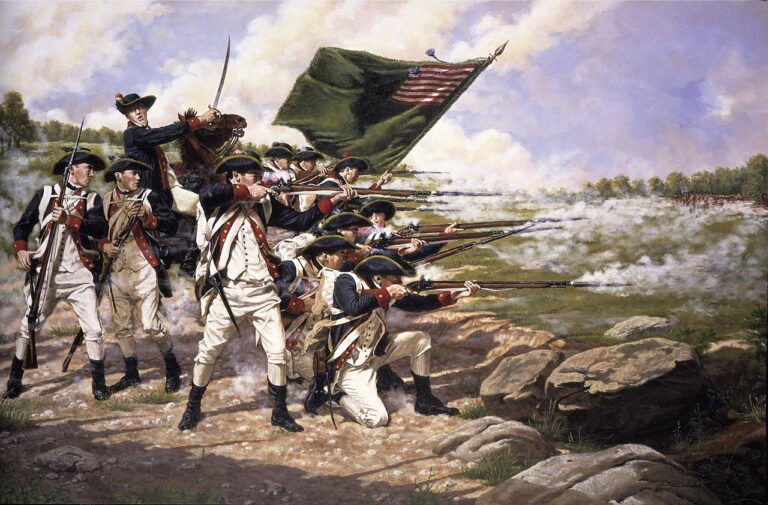
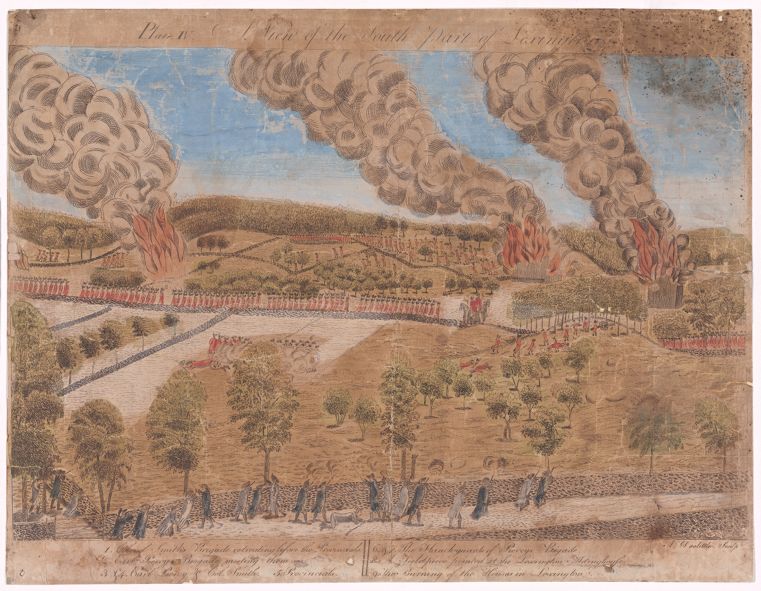
On the morning of April 19, 1775, the Lexington Alarm, a mobilization of colonial militia, spread like wildfire through the Massachusetts countryside, as the news of armed conflict between British regulars and colonial minutemen had occurred at Lexington and Concord. This was the beginning of the Revolutionary War, with riders like Paul Revere spreading the news. In the town of Mendon, William Darling, a 44-year-old father, left his family and farm to answer the call.
Decoding the Service Record of Lieutenant William Darling
According to the Massachusetts Soldiers and Sailors in the Revolutionary War, William’s service in those early months of the Revolution was extensive:

- The Lexington Alarm: Marched on April 19, 1775, to Roxbury to join the Siege of Boston.
- Continued Service: Muster rolls confirm he remained in service through September 25, 1775.
- A New Commitment: A note in the records states he was “reported enlisted into the army,” suggesting that after the initial 90-day militia service, he made the formal commitment to the Continental cause.
Beyond the Battlefield: Rachel Darling and the Homespun Movement
While William marched toward Roxbury, the war began for his wife, Rachel (White) Darling, right at home in Mendon. Left to manage the household amidst the economic chaos of the rebellion, Rachel’s role was as political as it was practical. As a woman of the “homespun” movement, she likely spent her days at the spinning wheel, ensuring the family wore only cloth made by her own hands to bypass British imports. In a world without tea or imported goods, Rachel’s resilience was the necessary backbone to William’s service in the field, while he carried a musket, she maintained the independence of the home.
Learn More: You can read more about Mendon’s early political defiance and the local homespun movement here.
Finding the Common Thread in Cemetery and Service Records
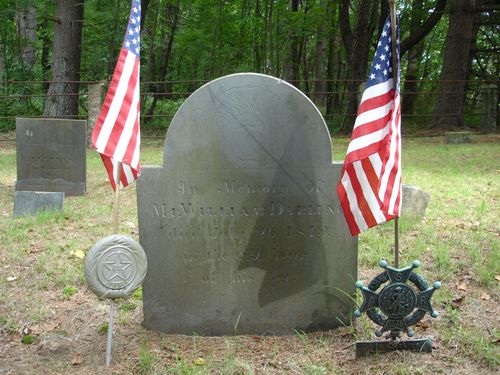
William lived to see the Republic he helped found grow for over forty years, passing away in 1819 at the age of 88. Today, he rests in the Darling Cemetery in Sutton, Massachusetts.
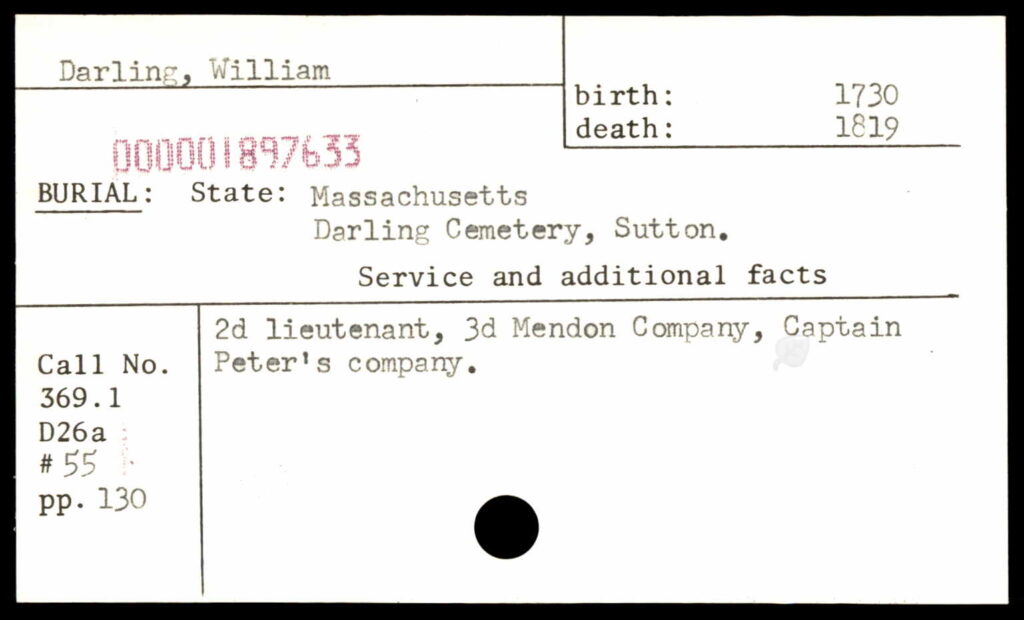
His burial index card stands as a testament to a man who, at mid-life, chose to serve when the alarm sounded.
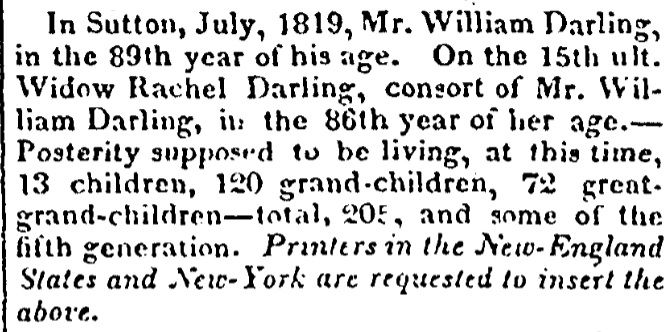
A Living Legacy: The 205 Descendants of William and Rachel Darling
William and Rachel weren’t just names on a page, they were a Lieutenant on the road to Roxbury and a woman holding the home front together.
Their impact is best captured in an 1825 notice from the Massachusetts Spy, which marveled at their “posterity” at the time of Rachel’s death. They left behind a staggering 205 living descendants across five generations. William and Rachel didn’t just fight for the birth of a new nation, they literally built its future.
Expert Research for Your Family History
If you are looking to honor a specific ancestor’s role in the ‘Common Cause’, I am here to help. You can explore my research services and specializations on my website.
Coming Soon: My second case study: Tracing Samuel Williams of New Jersey